Drive to Mount Cook, NZ
Nolan O'Connor
| 23-04-2026
 · Travel Team
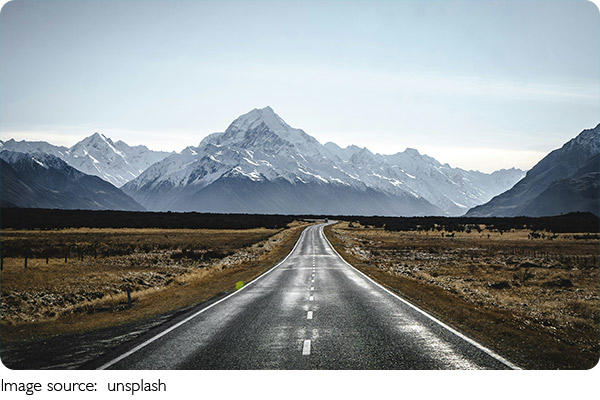
The road curves left and then right, following the western shore of a lake whose color sits somewhere between pale grey and glacier blue depending on where the light is coming from.
On the right, tussock grass covers the hillside in soft waves across the landscape. It takes on the golden-brown tones of a South Island winter, glowing warmly in the low light. The texture of the grass shifts gently with the wind, adding subtle movement to the otherwise still scene.
Aoraki / Mount Cook Canterbury Region 7999 New Zealand
Directly ahead, growing larger with every kilometer, a mountain rises with the specific kind of dominance that only the highest peak in a range can produce — vertical faces, permanent snow, and a summit that disappears into thin cloud before reappearing sharper and closer than expected. This is State Highway 80 approaching Aoraki Mount Cook, and it is one of the most rewarding drives in New Zealand — not because the road is interesting, but because of what it is pointed at.
Discover the grandeur of Helsinki's most famous landmark.
Escape the city buzz and enjoy the green oasis that defines New York City.
Discover the beauty and adventure of Cradle Mountain, Tasmania’s iconic wilderness.
Hostels are out—think jungle suites, cliffside views, and private bays. Will you find the island’s best-kept secret?
Explore stunning beaches, mountains, and villages on one of Greece’s most enchanting islands
Explore Thailand’s secluded beaches, limestone cliffs, and tropical adventures in Railay
Aoraki Mount Cook stands at 3,724 meters — the highest point in New Zealand and one of the most impressive alpine environments in the Southern Hemisphere. The national park surrounding it protects 23 peaks above 3,000 meters and contains the Tasman Glacier, the longest glacier in New Zealand at approximately 27 kilometers. The drive from the highway turnoff to Mount Cook Village at the road's end takes approximately 55 minutes and delivers continuously improving views of the peak across Lake Pukaki the entire way.
Why This Drive Belongs on Any South Island Itinerary
State Highway 80 is a 55-kilometer sealed road that branches off State Highway 8 near the southern end of Lake Pukaki and runs along the lake's western shore directly to Mount Cook Village. Unlike many scenic drives that reward you at specific viewpoints, this road delivers a continuous visual experience — the mountain is visible almost from the moment you turn off the highway, and it grows progressively larger and more detailed with every kilometer driven.
Lake Pukaki's color comes from rock flour — ultra-fine glacial sediment suspended in the meltwater that feeds the lake from the Southern Alps above. The same material that gives Iceland's glacial rivers their turquoise color produces a pale, milky blue-grey in Lake Pukaki that shifts significantly with cloud cover, time of day, and the angle of available light. On clear mornings with calm conditions, the lake surface reflects the mountain and the surrounding peaks with enough clarity to make the reflection nearly indistinguishable from the original.
The golden tussock grass covering the hillsides on the drive's eastern side is native to the South Island high country and reaches its most photogenic coloring in late autumn and winter when the dried stems catch low-angle light in warm amber tones — exactly the palette visible in the scene above.
Getting There
Mount Cook Village is located approximately 330 kilometers from Christchurch on the South Island's eastern coast and approximately 260 kilometers from Queenstown in the southwest. Both cities have international airports receiving direct flights from Auckland, Wellington, and several Australian cities.
Car rental is the only practical way to reach Mount Cook — there is no scheduled bus service operating year-round, and the national park's trails and facilities require the flexibility that a personal vehicle provides. Rental cars from Christchurch Airport start from approximately $45 to $70 per day for a standard vehicle. From Queenstown, rates are similar.
The drive from Christchurch via State Highway 1 south and then State Highway 8 west takes approximately three and a half hours without stops, passing through the Canterbury Plains and the Mackenzie Basin before reaching Lake Pukaki. The drive from Queenstown via State Highway 6 and 8 takes approximately three hours. Both routes are straightforward on good sealed roads.
From the Lake Pukaki turnoff, State Highway 80 adds approximately 55 minutes to reach the village. This final section should be driven at a relaxed pace with multiple stops — several informal pullouts on the lake shore provide direct water-level views of the mountain that are distinct from the road-level perspective.
Key Experiences at Mount Cook
Mount Cook Village is a small settlement within the national park boundary containing the visitor center, a small number of accommodation properties, and the trailheads for the park's main walking routes.
1. Kea Point Valley Track — the most popular trail in the national park, a 10-kilometer round trip through the valley below the mountain's main face, crossing three swing bridges and finishing at a glacial lake with icebergs floating in front of the glacier terminal face. The walk takes approximately three hours at a comfortable pace and involves minimal elevation gain. Entry to the national park and the trail is free.
2. Sealy Tarns Track — a steeper climb of approximately four hours return, gaining 700 meters of elevation to reach two small alpine lakes with elevated views over the valley and the surrounding peaks. The ascent involves a long section of steep metal stairs fixed to the hillside. Free entry.
3. Tasman Glacier viewpoint — a short 30-minute return walk from the road end parking area to an elevated viewpoint over the terminal lake of the Tasman Glacier, where icebergs calved from the glacier face float in grey glacial water. Free entry.
4. Ski plane and helicopter flights — scenic flights operating from a small airstrip near the village provide aerial views of the Tasman Glacier and landing options on the glacier surface. Fixed-wing ski plane flights start from approximately $280 to $380 per person. Helicopter flights with glacier landings start from approximately $350 to $450 per person.
Where to Stay
Accommodation at Mount Cook is limited to a small number of properties within the village, all of which book out well in advance during summer peak season from November through March.
The Hermitage Hotel is the only full-service hotel in the village and has operated at the base of the mountain for over a century. Rooms with direct mountain views from private balconies start from approximately $280 to $450 per night during peak season. Standard rooms without the mountain view start from approximately $180 to $280 per night. The hotel’s restaurant serves as the primary dining option for the village.
Mount Cook YHA offers dormitory and private room accommodation from approximately $35 per night for a dormitory bed and approximately $120 to $160 per night for a private room. The property is well suited to budget travelers and those who prioritize access to the trails over accommodation quality.
Glentanner Park Centre, located 25 kilometers south of the village near the Lake Pukaki shore, offers powered campervan sites from approximately $40 per night and basic cabin accommodation from approximately $80 to $120 per night. This option provides lakeside views of the mountain from a lower elevation and suits visitors with campervans or those wanting a more remote base.
The road to Mount Cook works best when treated as part of the experience rather than a means of reaching it. Stop at the southern end of Lake Pukaki where the view is broadest. Stop again halfway along the shore where the mountain first comes fully into view above the lake surface. Stop at the village and walk the valley track at whatever hour you arrive. The mountain will be different each time — different light, different cloud, different distance. Every stop adds something that the next one cannot replicate.